- The Wod - by Skyfit
- Posts
- Your Data Could Be Shared
Your Data Could Be Shared
Let's take a deeper dive of how your data moves around the internet.

Joshua Berkowitz
August 16, 2023

Wearable Data Privacy
Vol. 4

Data Privacy Stock Image
Training for a race and want help with your plan? Trying to lose weight and unsure of where to start? Are you an Office Athlete and want to get more out of your data? We’ll break down your data for you and offer insights on how to train smarter, for free. Email us here to set up a call with us.
State of the Union
Last week we covered Joe Rogan’s recent switch from his Polar heart rate monitor to Garmin caused by Polar’s change to their private policy. This edition got lots of feedback and questions on how your specific tech provider uses your data.
“That's sad how these tech companies do this [selling user data tied to wearables]. It's everywhere with social media as well.”
“Maybe put what they would be using the data for??? Bc still confused and still loyal to my Apple Watch.”
The advent of wearables has ushered us into the early stages of a health x technology revolution. With wearable technology sensors expected to grow at a compound annual growth rate (CAGR) of approximately 38% from 2017 to 2025 - now is a crucial time to understand how your data is used today and what safeguards are in place as of now.
How Wearables Work
Regardless of what company you are loyal to, all wearable devices work in a similar fashion. Below is a basic diagram of how your data is captured, calculated, and sent back for your viewing.
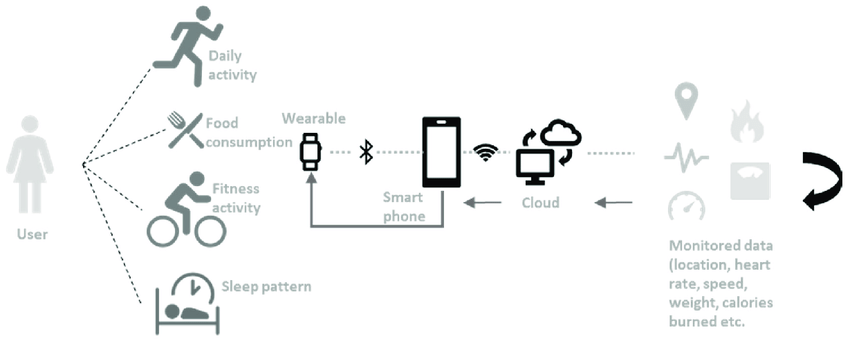
Basic Wearable Data Flowchart
Your wearable uses sensors to collect different metrics from your body and connects to your phone (typically via Bluetooth).
This data is passed to your phone and into whatever application you use.
Your data is then sent to the cloud for long-term storage and more intensive calculations to create the metrics you monitor (average heart rate, calories burned, strain, sleep time, etc.).
Your device then reads these final calculations and displays the results back to you.
Technological Risks
Now that we have an understanding of how your data is transferred from your wrist to data centers, let’s talk about the potential privacy risks.
Data Governance and Security
With your data being moved from your phone to cloud-based storage, the risk of security breaches and hacking exists. Because of this risk companies detail this risk in their private policies.
In addition to this, companies like Strava have gotten backlash over the publishing of their running heat maps, which gave away US military base locations.
Advertising
While many companies’ private policies detail they do not sell user-level health data to advertisers, they may provide advertisers with data that links your cookies or other device-level identifiers to an applicable advertising partner. See the example in the WHOOP private policy disclosure.
In Sum
We are not saying that wearable companies are sending your data out to anyone and everyone. However, it’s important to know how you’re protected, how companies use portions of your data, and the risks of the technologies you are using.
Want to learn more?
Something we missed or misspoke?
Want to hear on a specific topic?
Reply to us here and we’re happy to chat and help you learn more about your wearable.
Reply